Potty Training
How to know when your toddler is actually ready.
Not the age on a chart, but the signs. From four kids (so far) who each got there on their own timeline.
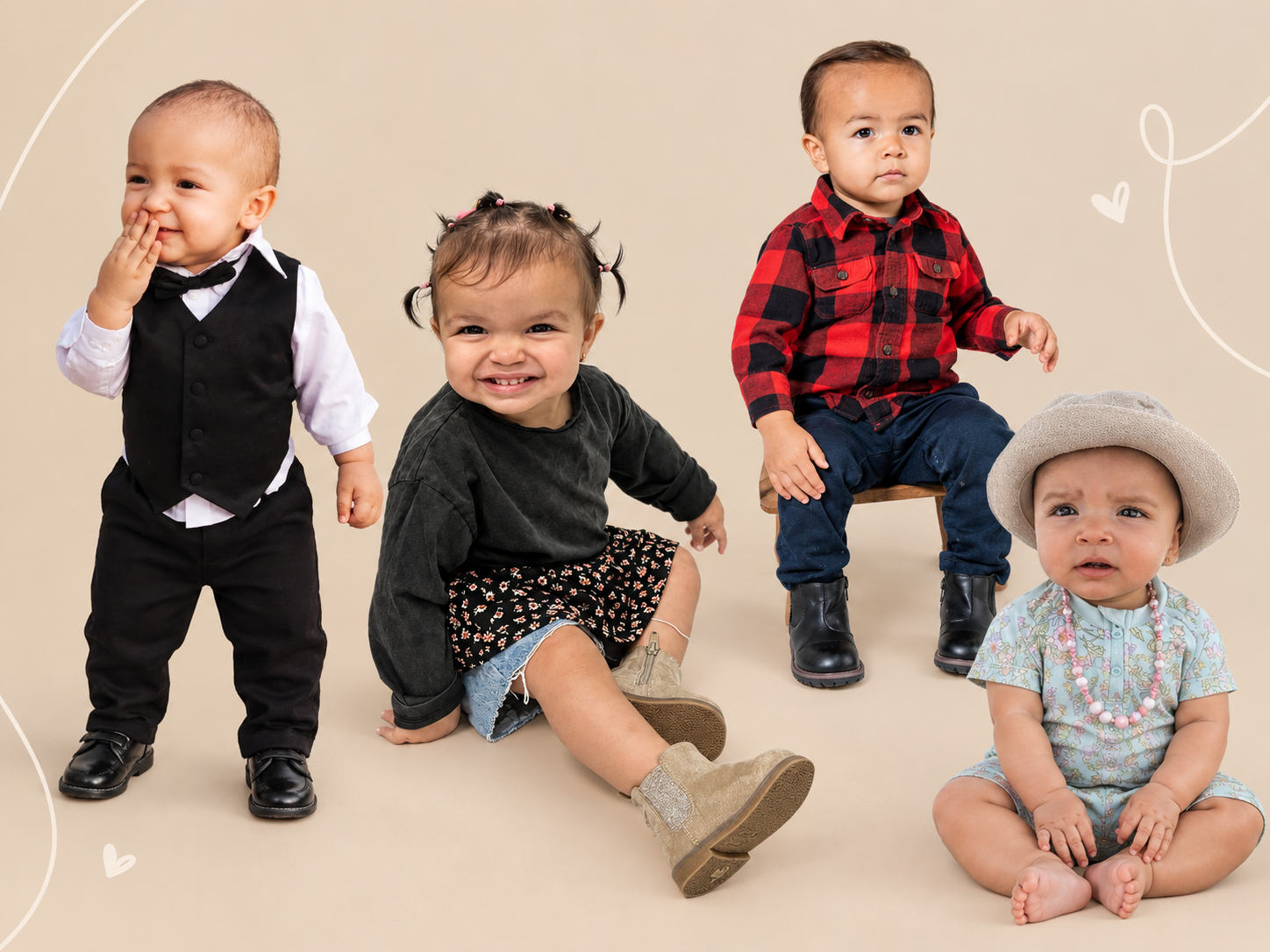
We've potty trained four of our five so far, and no two went the same way. Our three youngest weren't ready until after they turned two. Every time, the signs told me more than the age on any chart. — Anahely
Jump to a section
01
Physical Readiness
These are the body-level signs pediatricians generally point to. Most toddlers show these somewhere between 18 months and 3 years — the range is wide, and that's normal.
| Sign | What it looks like |
|---|---|
| Staying dry for longer stretches | A dry diaper for 2+ hours, or waking up dry from naps. |
| Predictable bowel movements | Going around the same time each day, rather than randomly. |
| Physical coordination | Can walk to the bathroom, sit down, and get back up without help. |
| Can pull clothing up and down | Elastic-waist pants and underwear make this easier to practice. |
| Shows discomfort in a dirty diaper | Tugging at it, telling you, or wanting it changed right away. |
02
Signs of Interest
This is the part that actually predicts success more than physical readiness does. A toddler who's curious moves faster than one who's just "old enough."
| Sign | What it looks like |
|---|---|
| Curious about the bathroom | Following you in, asking questions, wanting to watch. |
| Wants to wear "big kid" underwear | Especially if an older sibling wears it. |
| Can follow simple two-step directions | "Go get your shoes and bring them to me" — that kind of thing. |
| Uses words for bathroom needs | Even a made-up word, as long as it's consistent. |
| Doesn't want to be changed anymore | Resisting diaper changes, wanting independence. |
03
What Not to Rush
The biggest mistake I made with my second wasn't starting too late — it was starting because I felt like I should, not because he was showing me anything. It took twice as long and came with a lot more tears (his and mine).
04
What to Buy Before You Start
| Item | Category | Note |
|---|---|---|
| A potty chair or toilet seat insert | Essential | Try one of each if you're not sure which your toddler will prefer. |
| Training underwear or regular underwear | Essential | Skip pull-ups during the day — they feel too much like a diaper. |
| A step stool | Essential | For reaching the sink and the toilet independently. |
| A reward system (stickers, small treats) | Worth It | Optional, but it helped with three of mine. We did stickers, a little celebration song, and a potty that plays music when they finish (which always turned into a dance party). |
| A waterproof mattress cover | Worth It | For the accidents that happen at night. |
| Overnight pull-ups | Optional | Daytime and nighttime readiness usually happen months apart — that's normal. |
FAQs
What's the average age to start potty training?
There's a wide normal range, generally somewhere between 18 months and 3 years. Readiness signs matter more than the number on the calendar.
Can I potty train in a weekend?
Some toddlers pick it up quickly once they're truly ready; others take weeks. Both are normal — the "3-day method" works better for some kids than others.
My toddler was doing great and then had a setback. Is that normal?
Very common, especially around big changes — a new sibling, moving, starting daycare, or even just being sick. Most regressions pass with patience and consistency.
Should I start with the potty or go straight to the toilet?
Either can work. A potty chair feels more approachable to some toddlers; others prefer feeling like a "big kid" on the real toilet with an insert.
When should I check in with our pediatrician?
If your toddler shows no interest by age 3–4, or if you notice pain, resistance, or a sudden loss of previously mastered skills, it's worth a conversation at your next visit.
"Readiness looks different on every kid — trust what you're actually seeing, not the age you expected to see it at."
More toddler content is on the way.
Get the free guides and new posts in your inbox as soon as they're published.
Get the free guidesMedical Sources & Further Reading
Disclaimer: This page is general, educational information. It is not medical advice and does not replace your child's pediatrician. If you have questions or concerns about your own situation, the best first step is to ask your doctor.